Showing posts with label organ meats. Show all posts

Monday, July 29, 2013

how to raise more free-range eggs than you can possibly eat for $50 a year

first eggs from our first flock

(everything you ever wanted to know about backyard chickens but were afraid to ask)

A while back, I saw someone had posted about raising chickens and getting free-range eggs for only a couple bucks per dozen. While that is an accomplishment, we raised backyard chickens WAY cheaper than this and we're planning to do it again.

We are receiving our new batch of chicks August 9th, as I'm well enough to start raising chickens again. I thought I'd post about how we did it with our original flock and what we're doing differently this time around.

Sunday, September 23, 2012

Stage 1 Chicken Soup

slow food: slow roast chicken dinner by ebbandflo_pomomama, on Flickr
slow food: slow roast chicken dinner
by ebbandflo_pomomama, on Flickr

I've decided that since I have been successful at "hiding" organ meats in the broth I use to make my turkey stuffing for years, that I'd try to "hide" some liver in this soup.

Thus I begin by making chicken liver cubes before starting the soup.

Saturday, July 28, 2012

chicken broth

chicken broth by Muffet, on Flickr

Normally, I prefer making broth after roasting a whole chicken, as I'm fond of the flavors that develop from the Maillard reaction. I'm just not crazy about boiled meat.

But a while back, one of my local farmers had a deal going on pastured chicken necks & backs if you bought 20 pounds, so I figured I'd make broth and chicken meat.

Twenty pounds is a lot more than I thought it was. So my first go-round, before I'd decided to start the GAPS protocol, was the rather standard way of making chicken broth.

Wednesday, July 25, 2012

vitamin A

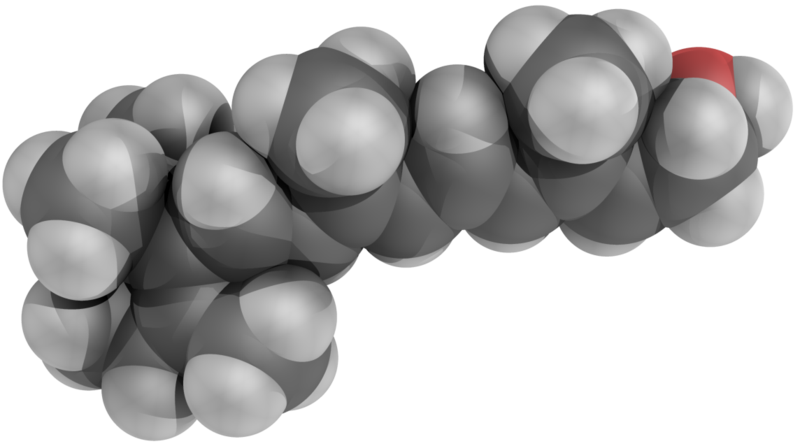
Retinol or Vitamin A 3D space model (balls model), by YassineMrabet, on Wikimedia Commons

There is just so much confusion on this topic that as a chemist, I decided to set the record straight.

Vitamin A comes in a number of forms:

retinol
vitamin A; the normal form that is stored in the body; chemically it contains an alcohol functional group
retinal
the form actively used by the eye; chemically, a reduced form of retinol containing an aldehyde functional group
retinoic acid
acts as an important hormone-like growth factor; chemically, an oxidized form of retinol containing a carboxylic acid functional group
retinyl palmitate
the form found in animal foods; chemically, an ester function group joins retinol to palmitic acid (the most common saturated fatty acid)
alpha-carotene, beta-carotene, gamma-carotene and cryptoxanthin
the provitamin A forms found in plant foods; the thesis of this post is that these are not "real" vitamin A, though useful nutrients on their own

So first, let's take a look at the various forms of vitamin A...